

Beauty & Aesthetics Regulation for Non-Surgical Procedures (Scotland)
Scotland has become the first country in the UK to formally introduce new laws such as the Beauty & Aesthetics
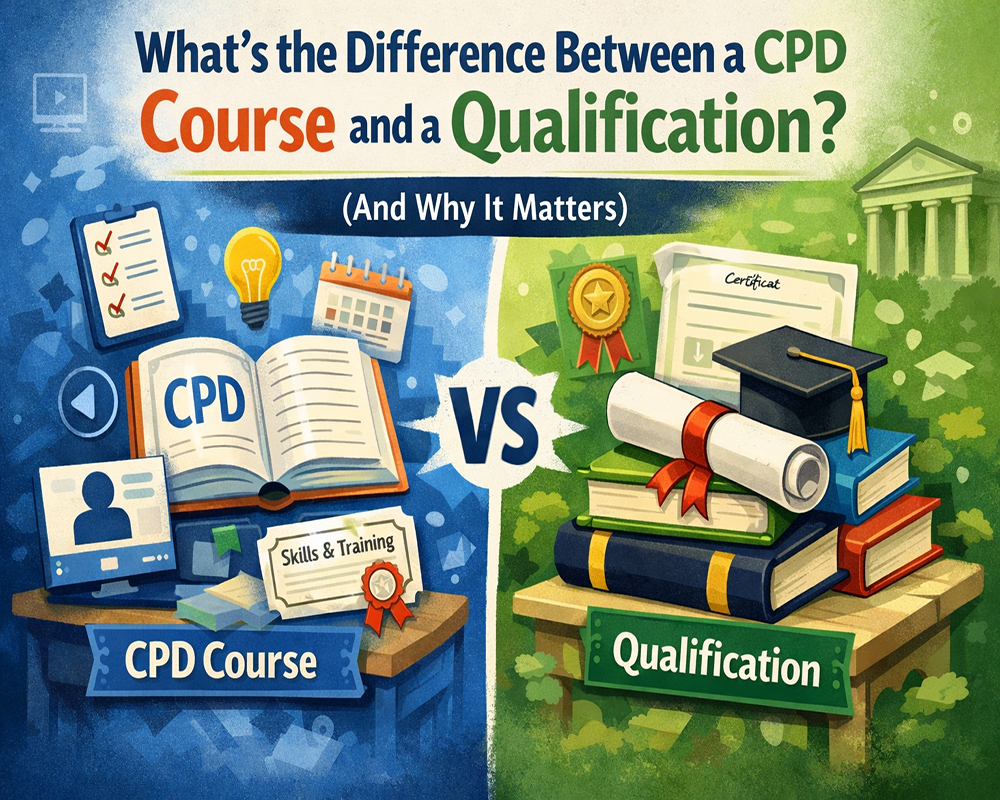
This is one of the most common questions we hear from practitioners who are just starting out or thinking about upskilling: what’s the actual difference between a CPD course and a qualification? And does it matter which one I have?
The short answer is yes — it absolutely matters. Especially right now, with the UK moving towards formal licensing for the beauty and aesthetics industry.
Let us break it down for you.
CPD stands for Continuing Professional Development. A CPD-accredited course is a short, skills-based training programme — usually completed in one or two days — that’s designed to teach you a specific treatment or technique.
CPD courses are great for expanding your skill set quickly. They’re flexible, practical, and they’ll typically get you insured to perform a treatment straight away (provided you already hold a relevant base qualification).
But here’s the important bit: a CPD certificate is not a formal qualification. It’s a record that you attended a course and completed some learning. It doesn’t involve the same level of assessment, theory or external verification that a regulated qualification does.
Think of it as proof you learned something — not proof you’ve been formally assessed and qualified to do it.
Ofqual is the government body that regulates qualifications and exams in England. When a course is Ofqual-regulated, it means it meets strict national standards for content, assessment and quality.
These qualifications sit on the Regulated Qualifications Framework (RQF) and carry levels — Level 2, Level 3, Level 4 and so on — that indicate the depth and complexity of the learning. They’re nationally recognised, accepted by employers and insurers, and they carry real weight in the industry.
At Elixir Skin Training, we’re an approved centre for both VTCT and Focus Awards, which means we can deliver Ofqual-regulated qualifications at Levels 2, 3 and 4.
Right now, the UK government is actively working towards introducing a licensing scheme for non-surgical cosmetic procedures. When that comes into effect, practitioners will need to prove they hold recognised qualifications to operate legally.
CPD certificates alone won’t meet those licensing requirements. They’re best used to supplement existing qualifications — not replace them.
Beyond licensing, there are practical reasons to care about this distinction. Formal qualifications give you stronger standing with insurers, build more trust with clients and set you apart in an increasingly competitive industry. If you’re planning to open your own clinic or work in a clinical setting, having the right qualifications behind you isn’t just a nice-to-have — it’s becoming essential.
This is something we specialise in at Elixir Skin Training. If you’re an experienced practitioner who’s been working with CPD-accredited training, you don’t have to start from scratch.
Our CPD conversion courses are designed specifically for practitioners who want to upskill their existing CPD accreditation into Ofqual-regulated qualifications. You’ll convert what you already know into a formally recognised qualification — without repeating the basics.
This pathway is managed by Carel, our trainer and Internal Quality Assurer, who works specifically with experienced practitioners on this conversion process. It’s structured, it’s efficient, and it means you’re future-proofed when licensing arrives.
If you’re a complete beginner, the route is different. You’ll want to start with a regulated qualification from the ground up.
We offer combined courses for beginners that take you from zero experience through to becoming a qualified skin specialist. These include Level 2 and Level 3 facial treatments, giving you the foundation you need to build a credible career.
From there, you can progress to Level 4 qualifications in areas like skin needling, chemical peels and dermaplaning — all regulated, all nationally recognised.
If you’re not sure which route is right for you, our Get Started page walks you through the options based on your experience level.
CPD courses absolutely still have a place — they’re brilliant for adding specific treatments to your offering once you’ve got that qualification foundation in place.
We offer a range of CPD-accredited advanced skincare courses covering treatments like LED therapy, microneedling, nano needling and microdermabrasion. These sit alongside your qualification and keep your skills sharp.
The key is having both: the qualification as your foundation, and CPD courses to keep developing on top of it.
One thing we hear a lot from students is that they’ve trained elsewhere in groups of 10, 15, even 20 people. That’s not how we do things.
Every training session at Elixir Skin Training is either 1-to-1 or a maximum of 2 students. You get a tailored learning plan, lifetime access to our online portal, and practical sessions scheduled around your availability. No weekly attendance required, no one-size-fits-all approach.
We also include business and social media coaching — because getting qualified is only half the picture. You need to know how to build a business around it too.
CPD and qualifications are both valuable — but they’re not the same thing. CPD is for development. A qualification is for proof of competence. And with licensing on the horizon, having the right qualification behind you has never been more important.
Whether you’re converting your CPD into a formal qualification or starting from scratch, we’re here to help you get there.
View CPD conversion courses | View courses for beginners | Get in touch
Scotland has become the first country in the UK to formally introduce new laws such as the Beauty & Aesthetics
The short answer? Yes. Absolutely. If you’re carrying out microneedling on clients, you need specialist insurance — and you need